
Street paving in New Orleans presents unique challenges because of the city’s heavy rainfall, low-lying geography, aging infrastructure, and variable soil conditions. Whether maintaining an existing roadway or constructing a new private street, successful paving requires more than installing a smooth asphalt surface. Proper drainage, stable foundations, suitable materials, and long-term maintenance all play important roles. Modern paving methods offer practical ways to improve durability while addressing the environmental and infrastructure challenges common throughout Greater New Orleans.
Why Street Paving in New Orleans Is Challenging
New Orleans has a distinctive combination of historic neighborhoods, heavily traveled streets, and challenging environmental conditions.
Many older roadways have undergone multiple repairs and resurfacing projects over time. Beneath the pavement, aging utilities, drainage structures, and changing soil conditions can complicate construction.
Some streets also pass through historically significant neighborhoods where improvements must consider surrounding architecture, existing materials, and applicable preservation requirements.
For property owners and developers, these conditions make careful evaluation essential before beginning a paving project.
Aging Roads and Underground Infrastructure
Roadway deterioration is not always limited to the visible surface.
Underground utility work, poorly compacted trenches, and weakened base materials can contribute to uneven pavement, cracking, and settlement.
Before resurfacing an older street, contractors should evaluate whether the existing pavement structure can support a new asphalt layer.
When significant foundation problems remain unresolved, simply adding more asphalt may provide only a temporary improvement.
Preserving Historic Streetscapes
New Orleans neighborhoods such as the French Quarter, Tremé, and Marigny have distinctive architectural and cultural characteristics.
Road improvements in these areas may require special attention to existing pavement materials, curbs, drainage structures, and historic features.
Not every historic roadway is suitable for conventional asphalt resurfacing.
For a closer look at this issue, read our article on asphalt paving and historic preservation in New Orleans.
Heavy Rainfall and Drainage Challenges
Water management is one of the most important considerations for street paving in New Orleans.
The city’s low elevation and frequent heavy rainfall create conditions where water can accumulate on roads and penetrate damaged pavement.
When moisture reaches the underlying base or subgrade, it can reduce support for vehicle loads and accelerate deterioration.
How Standing Water Damages Pavement
Standing water may indicate inadequate grading, clogged drainage structures, or depressions caused by pavement settlement.
Water entering cracks can weaken supporting materials, allowing repeated traffic loads to produce further cracking, rutting, and potholes.
Repairing surface damage without correcting drainage problems can lead to recurring failures.
Improving Roadway Drainage
Effective pavement drainage begins with appropriate surface grades and functioning drainage infrastructure.
Depending on the project, improvements may include:
- Adjusting pavement slopes to direct runoff
- Repairing damaged curbs and gutters
- Clearing or replacing drainage inlets
- Improving connections to existing stormwater systems
- Installing subsurface drainage where appropriate
Permeable pavement may be useful in certain engineered applications, but it is not a universal solution for New Orleans flooding.
Its suitability depends on soil conditions, groundwater levels, traffic loads, available storage, and the broader drainage system.
Soil Conditions and Pavement Settlement
The foundation beneath a roadway is just as important as the pavement surface.
New Orleans properties may encounter soft, compressible, or moisture-sensitive soils that require additional preparation.
If the underlying materials cannot adequately support traffic loads, pavement may develop depressions, cracks, or uneven sections.
Proper Subgrade Preparation
Before installing new pavement, contractors should evaluate the existing ground conditions.
Depending on project requirements, preparation may involve removing unsuitable materials, compacting the subgrade, installing aggregate base layers, or using stabilization methods.
A stable foundation helps distribute vehicle loads and reduces the risk of premature pavement failure.
Why Pavement Thickness Matters
Roads carrying frequent delivery trucks or other heavy vehicles generally require a different pavement design than lightly traveled residential streets.
Pavement thickness should be selected based on anticipated traffic, foundation strength, drainage, and applicable construction specifications.
Simply installing a thicker asphalt surface does not necessarily correct an unstable foundation.
Modern Materials and Street Paving Techniques
Advances in asphalt technology provide contractors with more options for constructing durable roads.
Modern asphalt mixtures can be designed for particular traffic loads, temperatures, and pavement requirements.
Industrial facilities face additional paving challenges because of heavy truck traffic and concentrated vehicle loads. Learn how modern industrial asphalt paving in New Orleans uses specialized materials, equipment, and construction methods to improve pavement performance.
Improved Asphalt Mixtures
Polymer-modified asphalt binders may improve resistance to rutting and cracking in suitable applications.
Reclaimed asphalt pavement can also be incorporated into new asphalt mixtures when properly processed and designed.
These materials can help balance pavement performance, cost, and resource efficiency.
Precision Paving and Compaction
Modern paving equipment helps contractors place asphalt at consistent depths and maintain appropriate surface grades.
Proper compaction is essential because insufficient density can increase moisture infiltration and accelerate pavement deterioration.
Professional asphalt paving services in New Orleans account for pavement thickness, installation temperatures, compaction requirements, and site conditions.
Sustainable Paving Practices
Asphalt is highly recyclable, and reclaimed material can reduce the demand for virgin aggregates and asphalt binder.
Warm-mix asphalt technologies may also reduce production temperatures and associated energy consumption.
The environmental benefits depend on the specific mixture, production methods, and construction requirements.
For additional technical information, the Federal Highway Administration’s pavement resources explain pavement materials, construction, and long-term performance considerations.
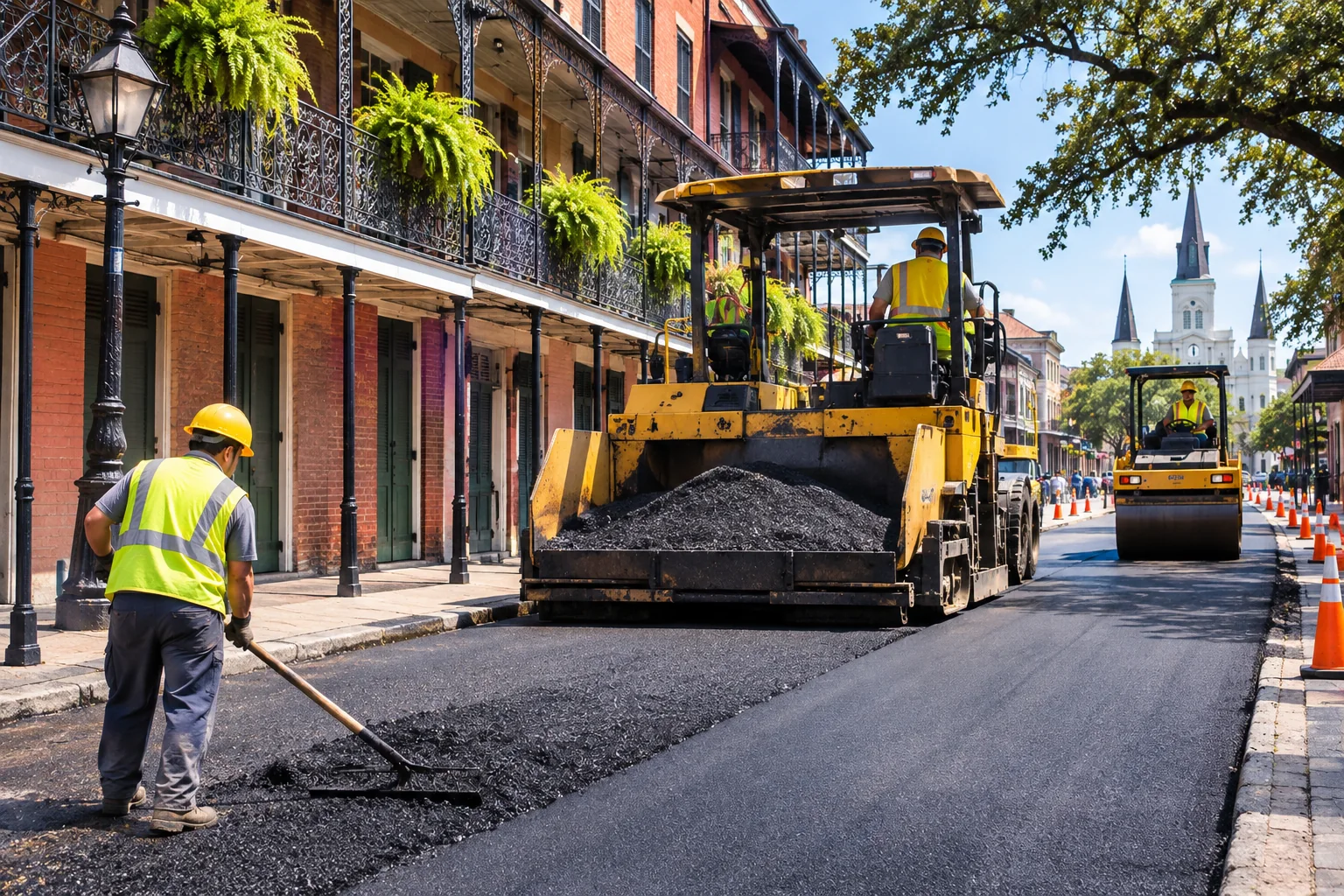
Modern asphalt paving equipment and proper compaction techniques help produce durable roadway surfaces suited to New Orleans’ traffic and environmental conditions.
Asphalt Resurfacing vs Road Reconstruction
One of the most important decisions in roadway rehabilitation is determining whether the existing pavement can be resurfaced or requires reconstruction.
When Asphalt Resurfacing Makes Sense
Resurfacing generally involves placing a new asphalt layer over an existing pavement structure.
This approach may be appropriate when the underlying pavement remains structurally sound but the surface has developed cracking, oxidation, or other deterioration.
Before resurfacing, contractors may need to repair damaged areas, correct drainage problems, and prepare the existing surface.
When Road Reconstruction Is Necessary
Extensive structural cracking, widespread settlement, severe base failures, or recurring drainage problems may indicate that resurfacing alone is insufficient.
Reconstruction allows damaged pavement and supporting materials to be removed and replaced.
Although reconstruction generally involves a greater initial investment, it may provide better long-term value when the existing foundation is no longer suitable.
Preventive Maintenance for New Orleans Streets
Regular maintenance helps extend pavement life and reduce the likelihood of major repairs.
For private streets, commercial access roads, and paved developments, preventive maintenance should include:
- Inspecting pavement for cracks and surface deterioration
- Repairing potholes and localized failures promptly
- Keeping drainage structures clear of debris
- Monitoring areas affected by heavy vehicle traffic
- Addressing settlement and recurring standing water
- Evaluating resurfacing needs before deterioration becomes widespread
Maintenance should also be performed after significant storms when flooding or prolonged water accumulation may have affected the pavement.
A proactive approach helps property owners identify problems while repair options remain manageable.
Community Planning and Long-Term Road Improvements
Street paving affects more than the pavement itself.
Road construction can influence traffic circulation, business access, pedestrian movement, parking availability, and neighborhood appearance.
For larger paving projects, clear communication and careful scheduling can help minimize disruptions.
Historic neighborhoods may also require coordination with appropriate authorities to protect existing streetscape features.
Long-term planning should consider how pavement improvements interact with drainage infrastructure, utility work, and future development.
Addressing these issues together can help reduce repeated excavation and premature pavement repairs.
Choosing the Right Paving Approach
Every street paving project has different requirements.
Before selecting a repair or construction method, property owners should consider:
- Existing pavement condition: Is the damage limited to the surface, or are structural problems present?
- Drainage: Does water collect on the pavement or affect the underlying foundation?
- Traffic loads: Will the roadway support passenger vehicles, delivery trucks, or heavy commercial equipment?
- Soil conditions: Is the existing subgrade stable enough to support the proposed pavement?
- Project budget: Which option provides the best balance of initial cost and long-term performance?
- Access requirements: Can construction be phased to minimize disruption?
- Applicable requirements: Are permits, engineering specifications, or historic preservation reviews necessary?
A professional evaluation can help identify the most appropriate solution for the property’s conditions and intended use.
Building More Durable Streets in New Orleans
Successful street paving in New Orleans requires careful attention to drainage, soil stability, traffic demands, and the condition of existing infrastructure.
Modern asphalt materials, professional installation methods, and preventive maintenance can help improve pavement durability and reduce long-term repair expenses.
Chris Paving LLC provides asphalt paving, resurfacing, repair, and roadway services throughout Greater New Orleans and surrounding Louisiana communities.
Whether you’re planning a private road, commercial access street, subdivision improvement, or pavement rehabilitation project, our team can help evaluate your paving needs.
Contact Chris Paving LLC today to discuss your project and request a free estimate.