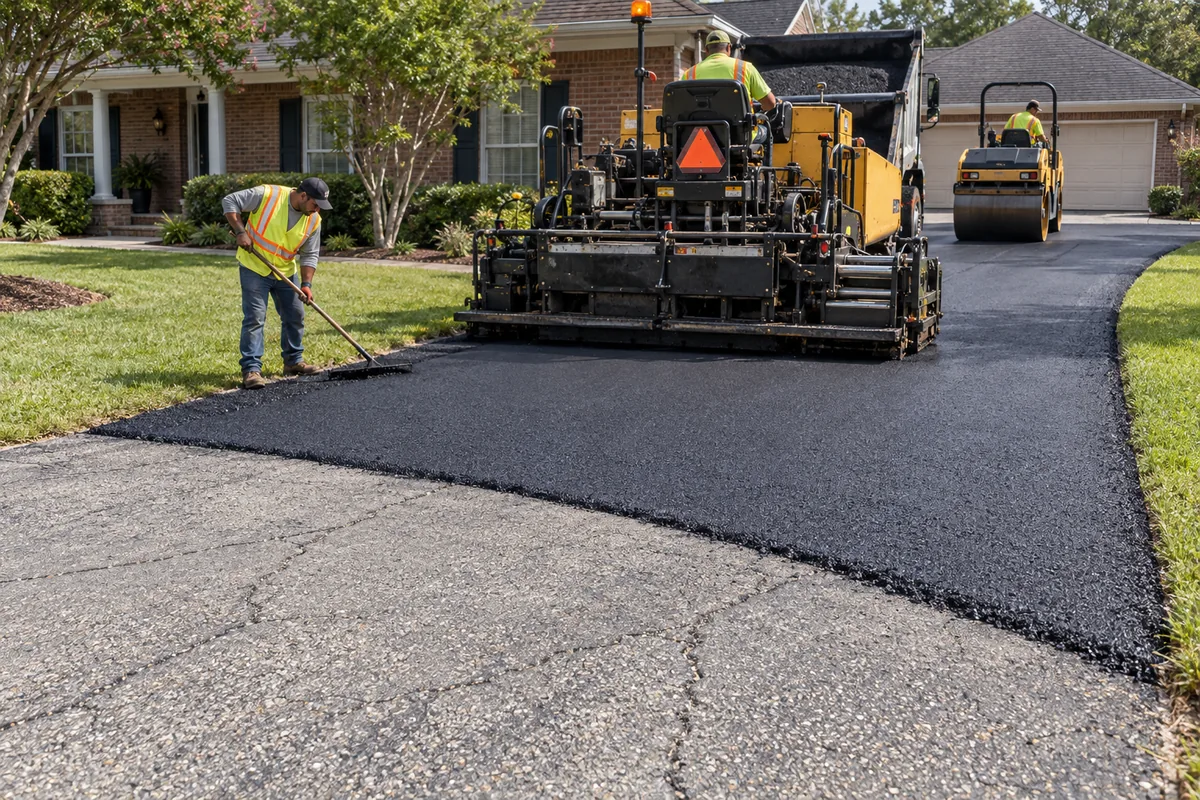
A worn driveway can leave homeowners wondering whether they need to start over or simply refresh the existing pavement. When comparing a new asphalt driveway vs. overlay in Southeast Louisiana, the answer depends on more than cracks, fading, or curb appeal. The condition beneath the surface, drainage, driveway height, and the vehicles using the space all help determine which option makes sense.
An asphalt overlay can renew a driveway that still has a sound foundation. A new installation or complete replacement provides an opportunity to address deeper problems and build a pavement structure suited to your property. For homeowners across New Orleans, Metairie, Slidell, Mandeville, and nearby communities, understanding that difference can help prevent spending money on a surface improvement when more extensive work is needed.
New Asphalt Driveway vs. Overlay: What Is the Difference?
Both options provide a fresh asphalt surface, but the work underneath can be very different.
New Asphalt Driveway Installation or Replacement
A new asphalt driveway may involve paving an area that has never been paved or replacing an existing driveway.
For a new installation, the contractor evaluates the ground, establishes the driveway’s layout and elevations, prepares a stable foundation, and installs the asphalt pavement.
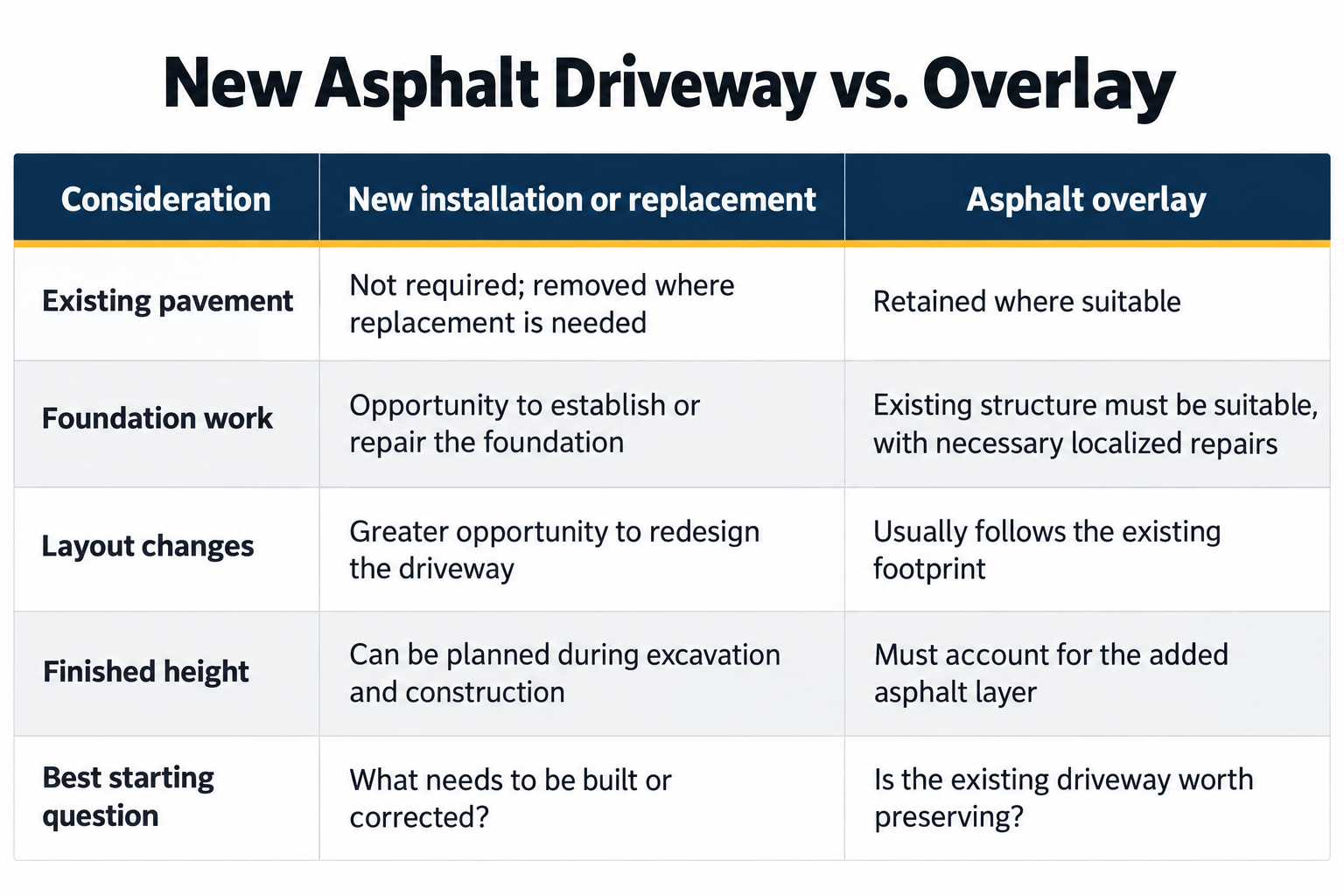
For replacement, the existing pavement is removed so underlying conditions can be evaluated and corrected as needed. Replacement does not automatically mean every inch of the existing base must be discarded. Suitable material may remain, while weak or damaged areas require additional work.
This approach allows the project to address the driveway as a complete system rather than focusing only on its visible surface.
Asphalt Driveway Overlay
An asphalt overlay places a new layer of asphalt over suitable existing pavement. It is also commonly called asphalt resurfacing.
An overlay retains much of the existing driveway structure. That makes its condition important: the pavement underneath must be capable of supporting the new layer.
Preparation may include repairing localized damage, cleaning the surface, and addressing transitions before paving. An overlay should follow an inspection and appropriate preparation rather than simply covering whatever damage is already there.
When Does an Asphalt Overlay Make Sense?
An overlay is worth considering when the driveway’s surface is worn, but its underlying structure remains serviceable.
Possible candidates include driveways with surface weathering, limited repairable damage, and no widespread instability. However, appearance alone cannot confirm whether resurfacing is appropriate.
Before recommending an overlay, a contractor should evaluate:
-
Whether damaged areas are isolated or widespread.
-
Whether the driveway shows movement, sinking, or recurring failures.
-
Whether existing drainage can function with the proposed finished surface.
-
Whether connections to garages, sidewalks, and the street can be maintained.
-
Whether the existing pavement can support the planned work.
Industry driveway guidance emphasizes inspecting the site and repairing distressed areas before overlaying. A clean, properly prepared surface is also important to the finished result.
An overlay can be a practical way to preserve useful pavement. The value comes from retaining a structure that is still doing its job.