
Why Does Water Pool on My Driveway? Drainage Solutions for Louisiana Properties
Driveway drainage problems in Louisiana often start with a low spot, an uneven slope, or a blocked runoff path. Heavy rain makes the problem obvious, but the lasting solution depends on why water cannot leave your driveway.
A puddle near the garage may need a different fix than water collecting along a cracked pavement edge. Before adding asphalt or installing a drain, identify where the water comes from, where it collects, and where it can safely go.
What Causes Driveway Drainage Problems in Louisiana?
Low Spots and Settling
Water follows the lowest available path. If part of your driveway settles, that depression can hold water even when the rest of the pavement drains normally.
Poor compaction, erosion, or changes in the supporting soil can contribute to settling. Repeated cracking around the same puddle can indicate that the issue extends below the surface.
An Incorrect or Interrupted Slope
A driveway needs a continuous drainage path. A nearly flat section, a dip near the garage, or a raised pavement edge can interrupt that path.
Simply raising one area may move the puddle somewhere else. The whole route to the discharge point needs to work.
Runoff From Roofs and Higher Ground
Sometimes the driveway receives more water than its surface alone would collect. Downspouts, adjoining walkways, and higher portions of the yard can send runoff onto the pavement.
If water crosses the driveway during every storm, its source may be outside the paved area.
Blocked Outlets and Raised Landscaping
Leaves, sediment, overgrown grass, and accumulated mulch can prevent water from leaving the driveway. A roadside ditch or culvert can also become restricted.
In some cases, basic maintenance restores the original drainage path without major paving work.
Slow-Draining or Saturated Ground
Where soil drains slowly or is already saturated, runoff may linger along driveway edges. A solution that relies only on water soaking into the ground may be unsuitable for that location.
Soil conditions and the availability of an outlet matter when choosing a drainage system.
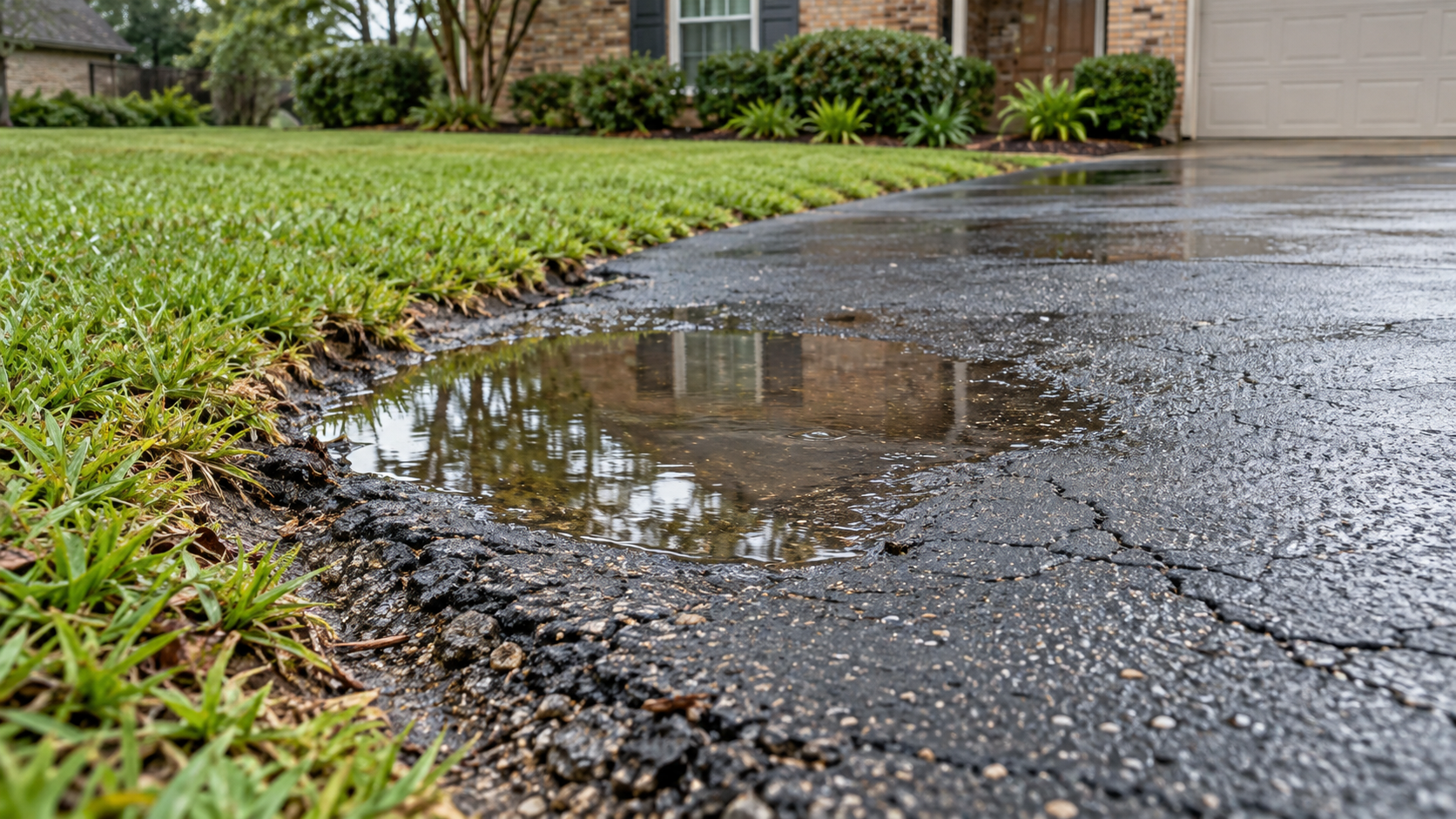
When Is Standing Water a Warning Sign?
A wet surface immediately after a storm is different from a recurring puddle in the same depression. Pay attention when pooling accompanies:
- Spreading cracks around the low spot.
- Loose pavement or sinking areas.
- Washed-out driveway edges.
- Water approaching the garage or house.
Water entering pavement cracks or undermining the edges can contribute to deterioration.
Take photographs during rainfall when safe and again after the surrounding pavement has dried. These help a contractor understand the flow pattern and the area that remains wet.
Solutions for Driveway Drainage Problems in Louisiana
Restore the Existing Drainage Path
Start by checking accessible gutters, downspouts, grates, and driveway edges for obstructions. Roof runoff may need to be redirected to a suitable receiving area.
Changes involving roadside ditches, culverts, or public drainage should be discussed with the responsible local authority.
Correct the Grade and Supporting Base
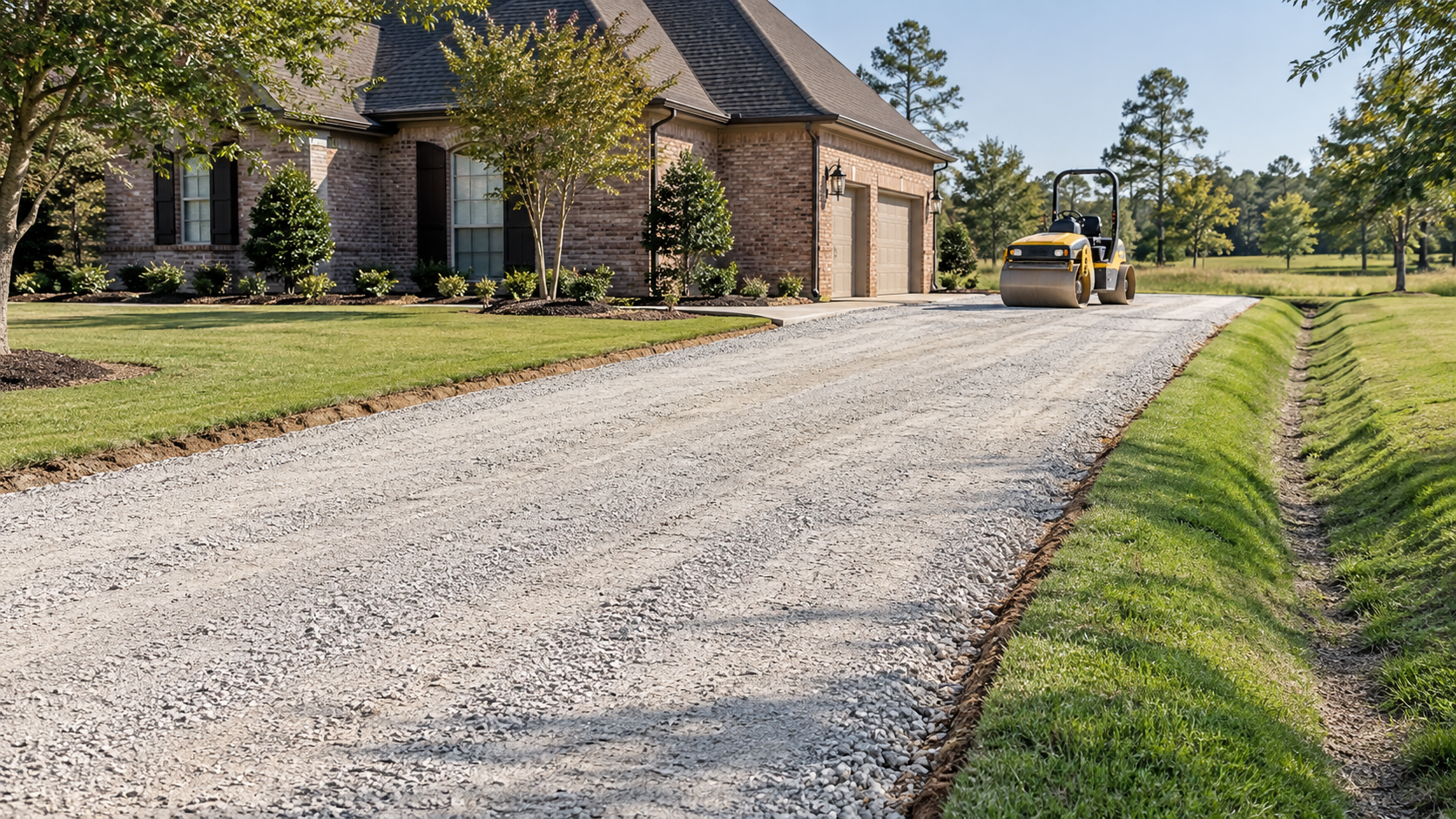
If the pavement slopes the wrong way or has settled, repairs may require removing the affected section, rebuilding the base, and restoring the surface at the correct elevation.
New construction should address grading and compaction before the final pavement is installed.
Chris Paving’s residential paving services include driveway installation, replacement, and suitable asphalt overlays, with recommendations based on the property’s condition and drainage.
Consider a Channel Drain for Surface Runoff
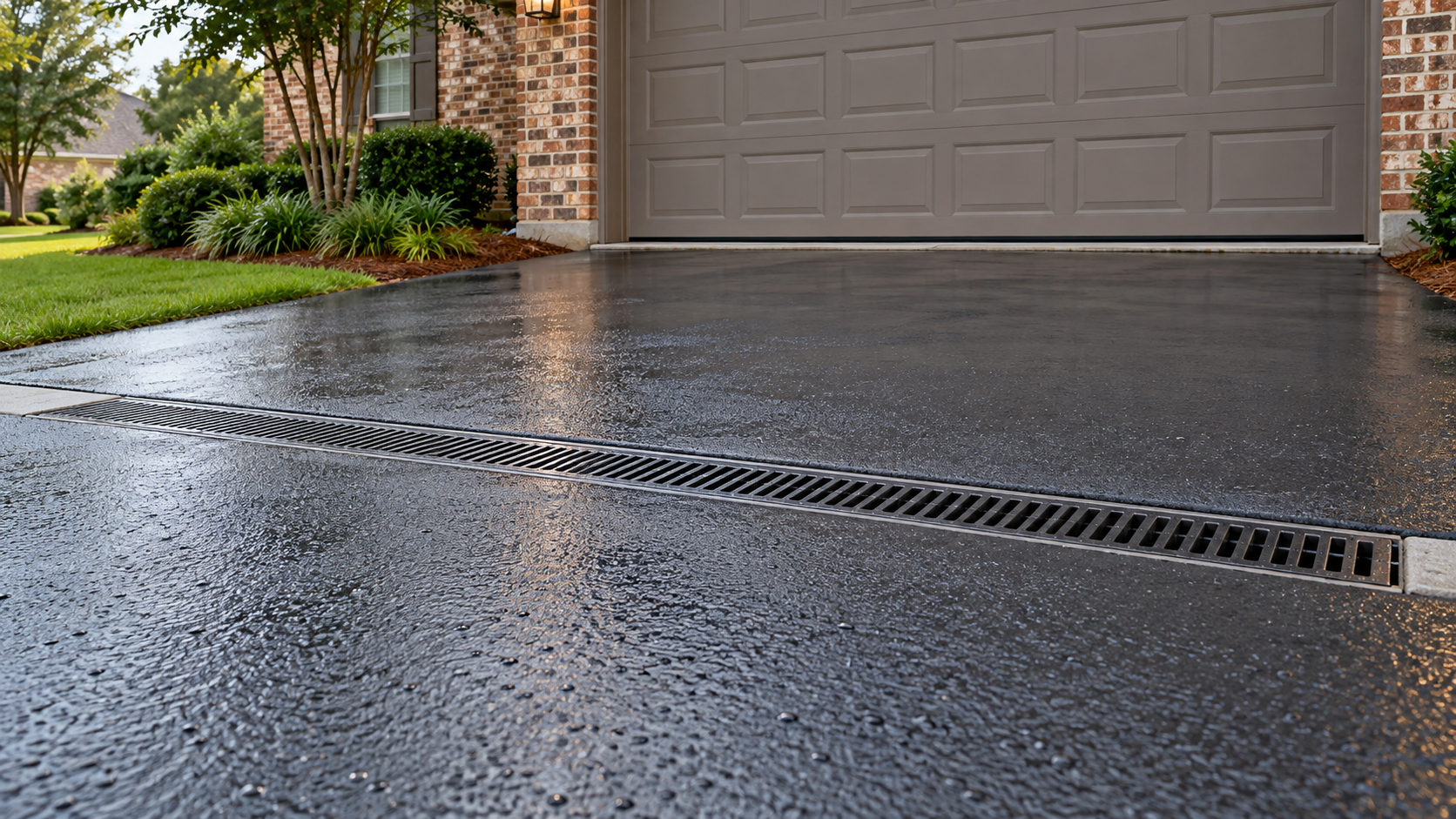
A channel drain, also called a trench drain, can intercept water crossing a driveway. It may be appropriate near a garage entrance or another collection point where grading alone cannot provide a practical solution.
The grate collects surface water, but the system also needs a correctly sized channel, an appropriate vehicle load rating, and a suitable discharge route.
A drain cannot solve the problem if its outlet backs up or has nowhere to send the water.
Evaluate Swales or Subsurface Drainage
A shallow landscaped swale can guide surface runoff along a planned route. A French drain typically uses a gravel-filled trench and perforated pipe to collect subsurface water.
These serve different purposes; a French drain is not automatically the best answer for a puddle on solid pavement.
Where space and soil conditions allow, a rain garden may help manage runoff from nearby paved areas. The EPA’s guide to green infrastructure explains how rain gardens and vegetated swales manage stormwater. Site suitability, overflow, and placement away from structures still need consideration. US EPA
Repair, Resurface, or Replace the Pavement
A localized depression may be repairable if the surrounding pavement and base are sound. An overlay may work where existing elevations and pavement conditions allow proper drainage.
Widespread settlement or base failure may require more extensive reconstruction.
Adding a new layer without evaluating elevations can leave the same low spot or create problems at garage thresholds and adjoining walkways. Correct the cause before covering the surface.
Will Sealcoating Stop Water From Pooling?
No. Sealcoating does not correct driveway slope, rebuild a failing base, or fill a significant depression.
It is a maintenance treatment for suitable asphalt pavement. Drainage and structural repairs should be addressed before deciding whether sealcoating is appropriate.
How Much Does Driveway Drainage Repair Cost?
The cost of fixing driveway drainage problems in Louisiana depends on the cause and the amount of work required. Clearing an obstruction is a different project from removing pavement, rebuilding a base, or installing a drainage system.
An estimate should account for:
- The size and condition of the affected area.
- Pavement removal and replacement.
- Soil and supporting base conditions.
- Drainage components and the discharge route.
- Equipment access and restoration work.
- Any necessary approvals.
Ask what is causing the pooling and where water will go after the work is complete. A useful estimate explains the proposed correction as well as its price.
Plan the Outlet Before Starting Repairs
Every drainage solution needs a suitable destination for the water. Avoid redirecting runoff toward the house, neighboring property, or an area that already floods.
Local requirements may apply to connections and changes involving public drainage infrastructure. Some properties require a drainage specialist or engineer in addition to paving work.